
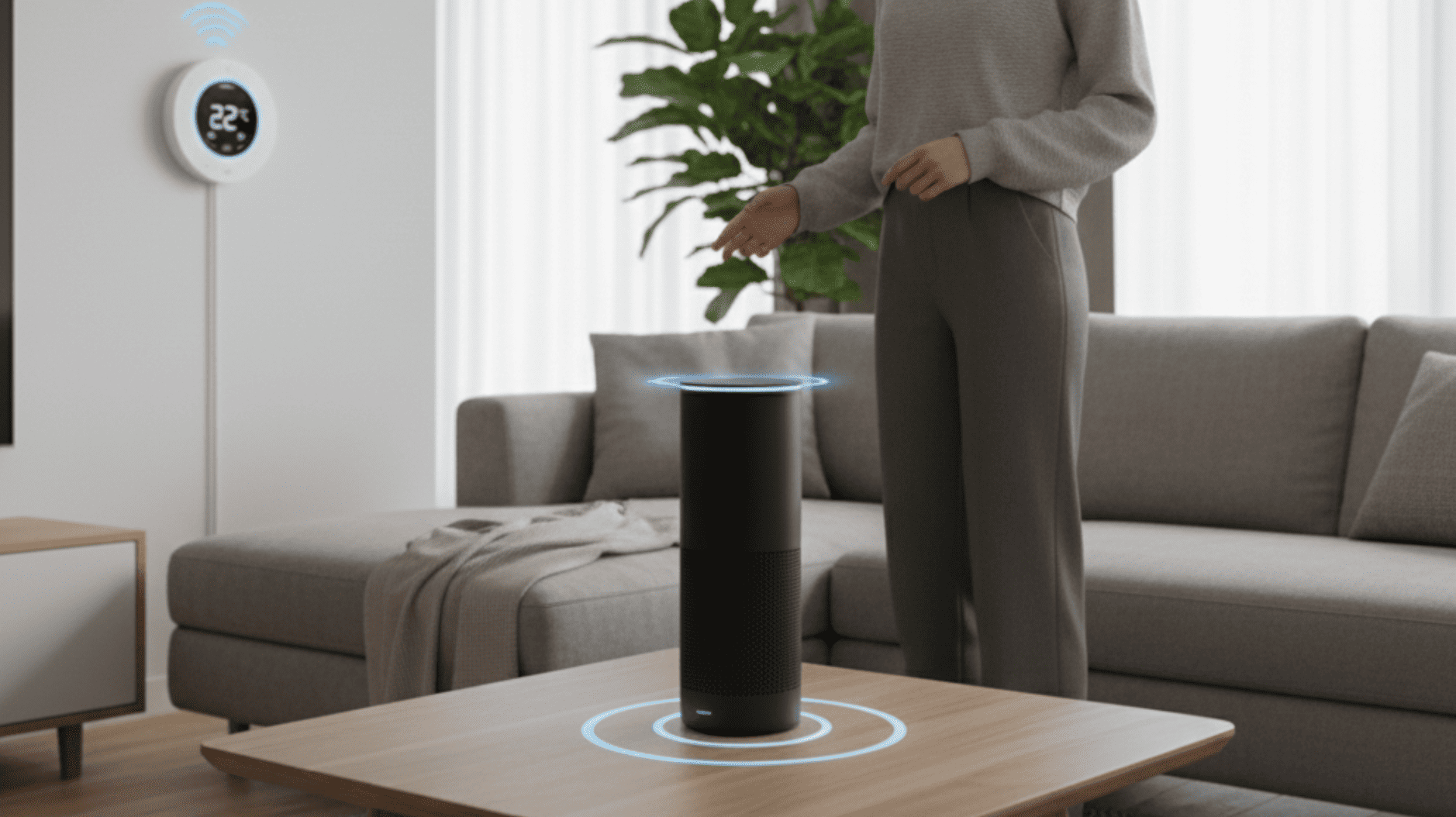
Voice-Activated Home Features: Convenience at Your Fingertips
Imagine simply walking into your home and saying, “lights off” or “play my favourite song” and your home responds. Smart home features that respond to voice commands have revolutionized how we interact with our homes, making them more practical and convenient. It’s not only convenient but also adds a modern flair to your living space.
With the rising trend of smart home appliances, it’s important to know the advantages and potential uses of voice control. These technologies allow users to control home security, thermostat and more, to create a tailored environment. Explore the transformative power of voice control in homes and how it simplifies our lives.
What are Voice-Controlled Home Features
Voice-controlled home features allow you to interact with smart devices through voice commands. These features involve multiple applications, improving convenience and productivity.
Astute Assistants
Smart assistants (like Amazon Alexa and Google Assistant) are the main voice interfaces. They respond to voice instructions and perform a variety of tasks, including playing music and setting reminders. Smart assistants connect with a range of devices for seamless interaction.
Lighting Management
Smart lighting systems can be controlled to dim, change colour, and turn off and on. Philips Hue and LIFX systems, for instance, obey voice commands, saving energy, and setting the mood for various activities.
Monitoring of Security
Voice commands enhance home security systems like Ring and Arlo. Voices commands can be used to view security cameras, lock doors, and receive notifications of potential threats, enhancing security and safety.
Control of the Thermostat
Voice-activated smart thermostats like Nest and Ecobee can control temperature settings. Schedules, modes, and energy efficiency can be set, providing optimal comfort.
Media Oversight
Voice control can be applied to media equipment. This allows users to play, pause and skip media on services like Spotify and Netflix without remote controls for easy entertainment.
Kitchen Equipment
Smart kitchen appliances are made easy with voice control. Timers, settings, and recipe information can be managed via appliances, improving cooking experiences.
Integration of Home
Connecting voice-controlled devices forms an integrated smart home system. Users can program routines that execute several actions, simplifying use and enhancing the overall experience. Voice-activated home features have great potential to make homes more accessible, efficient and secure.
Voice-Controlled Home Features Advantages
Voice-controlled home features provide numerous benefits, making life easier and improving overall quality of living. These advantages include convenience, accessibility and energy savings.
Accessibility and Convenience
A key advantage of using voice-activated home features is convenience. Voice commands enable hands-free operation, like setting the temperature or turning lights on and off, leading to more efficient tasks.
For those with mobility issues or disabilities, accessibility is enhanced, allowing them to control their surroundings with ease. Users can easily make adjustments, like activating appliances or locking doors, by simple voice commands.
Efficiency of Energy Use
Voice control for energy efficiency is a key feature. Voice-controlled thermostats enable efficient temperature adjustments by considering occupancy patterns, avoiding energy wastage. Voice-controlled lighting allows users to switch off lights in rooms not in use, helping to reduce energy costs.
Voice-controlled smart plugs also allow users to track energy consumption of devices, which helps in making informed usage choices and adopting sustainable practices.
Common Voice-Activated Home Appliances
Voice-activated home devices make life easier by allowing users to control them using voice commands. Different devices provide unique features that add to the smart home experience.
Intelligent Speakers
Smart speakers act as the hub of voice-controlled smart homes. Popular models such as Amazon Echo and Google Nest Audio allow users to play music, schedule reminders and search for information with voice commands.
They connect with other smart home devices, enabling voice-activated control of lights, thermostats and security. Further, Alexa and Google Assistant can offer timely information and make task management and home automation seamless.
Intelligent Lighting
Smart lighting products help users improve their living environments by customising their lighting. Lights like Philips Hue and LIFX can be switched on/off, dimmed and coloured with voice commands.
Compatibility with voice assistants allows scheduling and group control of lights. These features not only enhance the atmosphere of a home but also save energy when lights are unused.
Connectivity to Home Automation Systems
Voice-activated home devices are compatible with different home automation systems, offering convenience and control.
Compatibility with Other Devices
Interoperability is key to integrating voice-controlled home features with automation systems. Popular smart devices such as lights, thermostats, and cameras are compatible with major voice assistants, such as Amazon Alexa and Google Assistant.
This compatibility enables users to seamlessly integrate devices from various brands (Philips Hue bulbs can work with Nest thermostats). And devices can be integrated via a hub such as SmartThings or Apple HomeKit to allow control via voice.
Setting Up Voice Control
Enabling voice control in home automation systems is easy. The initial step is to link the voice assistant to the home Wi-Fi. Then, they need to connect supported devices via their apps, guided through the setup process. Once the devices are set up, users can rename devices to make them easier to identify.
For instance, instead of saying “Turn on the Lamps in the Living Room”, simply say “Turn on the Living Room Light”. Lastly, routines or automations can be set up in the smart home app, enabling multiple devices to be controlled with a single command for a seamless smart home experience.
Security and Privacy Considerations
Security and privacy issues pose a major concern for users of voice-controlled home features. Issues related to data privacy and access to personal data are raised by smart device integration.
Data Security
Security is important in voice-activated systems. Devices typically collect user data, such as voice data and settings. It’s imperative for users to select devices that offer strong encryption standards. For instance, devices employing advanced encryption standards (AES) offer more secure protection.
User Authentication
User authentication increases security of voice activated devices. Using multi-factor authentication (MFA) helps prevent hacking. Voice recognition software should be regularly updated for enhanced accuracy and security. Consumers can establish personal identification numbers (PINs) or make use of biometric features, enhancing the security of their voice commands.
Privacy Policies
Privacy policies shape data management practices. Consumers need to read manufacturers’ policies to understand how data will be used, stored and shared. It’s essential to choose brands committed to protecting privacy and offering data control options. For example, companies that include opt-out options for data gathering enable users to manage their data.
Device Monitoring
Device monitoring aids voice security. Regularly review connected devices for unusual connections or settings. Many devices have monitoring software that notify of attempts. Network security measures, including strong passwords and home Wi-Fi security, enhance security.
Regular Updates
Voice-activated devices must be regularly updated These often include software patches that fix security issues and improve security mechanisms. It’s important for users to keep devices up to date by activating automatic updates or regularly checking for them.
Limitations of Voice Recognition
The limitations of voice recognition can also pose security risks. When mistaken, these technologies can invoke unintended responses which could potentially be exploited for security purposes.
The risks can be minimised by setting devices to require confirmation for critical commands, particularly those concerning security, such as locking doors or activating alarms.
By taking these issues into account, users can take advantage of the convenience of voice-controlled home features while protecting their privacy and security.
Voice-activated home technologies are transforming the way we live. These features not only offer convenience but also energy savings and accessibility. With the development of smart home technologies, the future holds even greater convenience and integration.
Through the use of voice technology, people can streamline their lives and personalize their living spaces according to their preferences. But it’s crucial to stay alert to security and privacy concerns, so that the advantages of this technology can be harnessed without compromises. By taking appropriate safety measures, voice-activated home features can improve life quality, making homes more intelligent and responsive.